
'/%3E%3C/svg%3E)

'/%3E%3Cpath%20fill='%23b2b2b2'%20d='M241%20382q0%2016%2017%2026%2017%2011%2042%2011t42-11q16-11%2017-26V269H241'/%3E%3Cpath%20fill='%239f7e00'%20d='M241%20379q0%2014%208%2023%209%209%2021%209%2014%200%2021-9%209-9%209-23V269h-59'/%3E%3Cpath%20d='M241%20339v-70h59v110q0%2014-9%2023l-6%205v-68h-15v72q-8%200-14-4v-68zm59%2040c0%2022%2015%2032%2029%2032%2021%200%2030-18%2030-32v-40h-59'/%3E%3Cpath%20fill='%239f7e00'%20d='M266%20277v5h2v12h-3v-5h2v-5h-9v5h2v5h-4v9h3v18h-5v10h34v-10h-5v-18h3v-9h-4v-5h2v-5h-9v5h2v5h-3v-12h2v-5zm42%20101q0%2010%206%2017%206%206%2015%207%2010-1%2016-7%206-7%206-17v-29h-43'/%3E%3Ccircle%20fill='%230044ad'%20cx='329.5'%20cy='372'%20r='6'/%3E%3Cellipse%20fill='%230044ad'%20cx='300'%20cy='340'%20rx='16'%20ry='21'/%3E%3C/svg%3E)


'/%3E%3C/g%3E%3Cuse%20href='%23c'%20transform='matrix(-1%200%200%201%20720%200)'/%3E%3C/svg%3E)





Umbilical Pilonidal Sinus Abscess with Instillation NPWT
A documented umbilical pilonidal sinus abscess case involving MRSA-positive culture, abscess drainage, Polyhexanide + Poloxamer solution irrigation, instillation NPWT and primary suturing after infection control.

Essential Case Information
This overview summarizes the case in a structured format: who, what, where, when, why and how the umbilical pilonidal sinus abscess care pathway was managed.
The Patient
A 15-year-old male patient with no reported comorbid disease, referred from another center.
The Clinical Problem
Redness, pain, discharge and odor in the inferior umbilical region, diagnosed as umbilical abscess associated with umbilical pilonidal sinus.
The Setting
The case was documented by the Plastic, Reconstructive and Aesthetic Surgery Department, Wound Healing Unit, Kahramanmaraş Sütçü İmam University Faculty of Medicine.
The Timeline
After culture and drainage, instillation NPWT was applied and dressings were renewed every 3 days. On day 9, infection signs were absent and culture was negative.
The Objective
The objective was to manage an infected umbilical abscess cavity using drainage, Polyhexanide + Poloxamer irrigation and instillation NPWT before primary closure.
The Care Pathway
Abscess content was drained, the cavity was washed with Actolind® Solution Plus, instillation NPWT was applied, and primary suturing was performed after infection control.
Objective
This case presents the use of Polyhexanide + Poloxamer solution with instillation NPWT in the management of an umbilical pilonidal sinus abscess. The objective was to support abscess cavity cleansing, infection control and wound preparation before primary suturing.
Case Summary
A 15-year-old male patient, referred from another center and without reported comorbidity, presented with redness, pain, discharge and odor in the inferior umbilical region. Wound culture was obtained and MRSA growth was reported.
The patient was diagnosed with umbilical abscess. A 3 cm incision was made approximately 2 cm below the umbilicus, and about 250 cc of abscess content was drained. The cavity was then washed with Polyhexanide + Poloxamer solution.
Wound Care Method
- Wound culture was obtained before treatment planning.
- MRSA growth was reported in the wound culture.
- Umbilical abscess was diagnosed.
- A 3 cm incision was made below the umbilicus.
- Approximately 250 cc abscess content was drained.
- The resulting cavity was washed with Actolind® Solution Plus.
- Instillation NPWT was applied using Actolind® Solution Plus.
- The instillation cycle was reported as 10 cc per hour, 2-minute dwell time, then withdrawal.
- Dressings were renewed every 3 days.
- After infection control, primary suturing was performed.
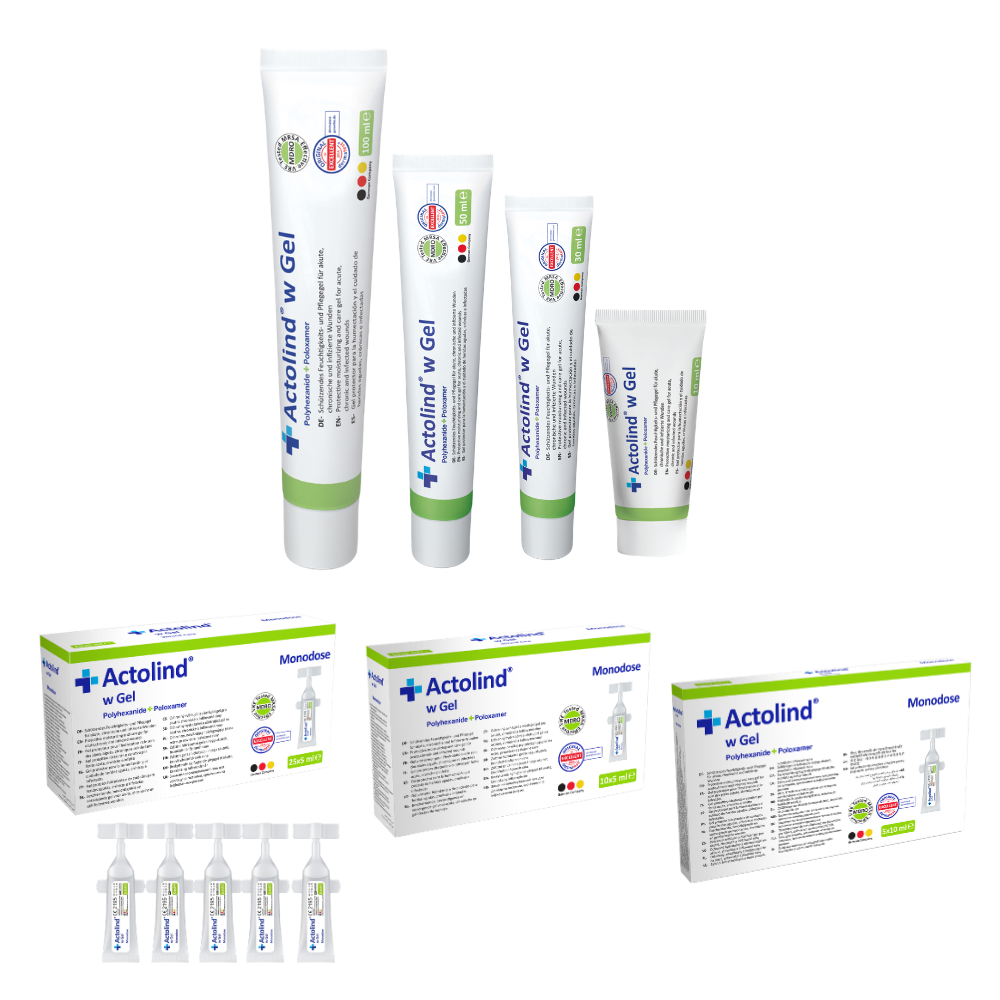
- Actolind® Gel Plus was recommended for daily pressure dressing after discharge.
Clinical Follow-up
During follow-up, instillation NPWT was continued with scheduled dressing renewals every 3 days. On day 9, no infection signs were observed and culture was reported as negative. Primary suturing was then performed with 2.0 prolene.
Outcome
The case documentation reported complete wound improvement after the use of Polyhexanide + Poloxamer instillation NPWT and subsequent primary suturing. The patient was discharged with daily Actolind® Gel Plus pressure dressing recommendations.
Umbilical Pilonidal Sinus Image Areas
Use these image fields for the original case visuals. Image paths and labels can be changed from the settings area at the top of this HTML block.
Initial Abscess Presentation · 02.08.2022
 Post-drainage Wound · 05.08.2022
 Post-suturing Follow-up · 11.08.2022
 Later Follow-up · 21.08.2022
Documented Follow-up Steps
The timeline below summarizes the reported wound care process and key clinical milestones.
Umbilical Symptoms
The patient presented with redness, pain, discharge and odor in the inferior umbilical region.
MRSA Detected
Wound culture was obtained, and MRSA growth was reported in the case documentation.
Abscess Drainage
A 3 cm incision was made approximately 2 cm below the umbilicus, and about 250 cc abscess content was drained.
Solution Cleansing
The cavity was washed with Actolind® Solution Plus before instillation NPWT was applied.
NPWT Protocol
Instillation NPWT was applied using Actolind® Solution Plus, reported as 10 cc per hour with 2-minute dwell time before withdrawal.
Dressing Renewal
Dressings were renewed every 3 days during the documented treatment period.
Negative Culture
On day 9, no infection signs were present and wound culture was reported as negative.
Primary Suturing
Primary suturing was performed with 2.0 prolene, followed by daily Actolind® Gel Plus pressure dressing recommendations.
Outcome Highlights
Explore More Actolind® Clinical Case Resources
Review additional wound care case materials, product information and professional resources prepared for healthcare professionals.
View All Case Studies