





Venous Ulcer Actolind® Experience
A documented venous ulcer case involving Actolind® solution and gel, structured dressing care and compression bandage support during an 82-day clinical follow-up period.
Essential Case Information
This overview summarizes the case in a structured format: who, what, where, when, why and how the venous ulcer care pathway was managed.
The Patient
A 62-year-old female patient with Type 2 Diabetes Mellitus and a high body mass index.
The Clinical Problem
A venous insufficiency-related ulcer developed in a previously operated area. The wound had been present in a region associated with long-term venous disease.
The Setting
The case was documented at Medilife Beylikdüzü Surgical Medical Center in Istanbul.
The Timeline
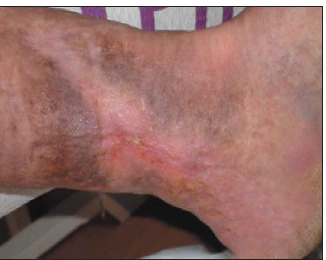
The case was followed for 12 weeks. The first condition and the 82-day follow-up condition were photographed with patient permission.
The Objective
The objective was to evaluate the use of Actolind® solution and gel in venous ulcer care together with a compression bandage system.
The Care Pathway
The wound was pre-cleansed with isotonic solution, washed with Actolind® solution, covered with Actolind® gel and supported with a triple compression bandage system.
Objective
This case presents the clinical experience of using Actolind® solution and gel in a venous ulcer case. The aim was to evaluate Actolind® use together with regular dressing care and compression support.
Case Summary
The documented case involved a 62-year-old female patient with Type 2 Diabetes Mellitus. A venous ulcer developed in an area that had been operated on years earlier. The patient had a body mass index reported as 42.4%.
The wound care program was carried out over a 12-week period. Dressings were performed every other day together with a triple bandage system, resulting in a total of 42 dressing sessions. The initial condition and the 82-day follow-up condition were photographed with patient permission.
Wound Care Method
- The wound was opened appropriately before dressing.
- Initial pre-cleansing was performed with isotonic solution.
- The wound was then washed again with Actolind® solution.
- After washing, separation of non-viable tissue from healthy skin was observed.
- Non-viable tissue was debrided as clinically required.
- Actolind® gel was applied to cover the entire wound area.
- The wound was closed with an appropriate dressing.
- A triple compression bandage system was applied over the dressing.
Clinical Follow-up
The patient was followed regularly during the 12-week wound care period. Dressing changes were planned every other day. The compression bandage system was applied together with the wound care protocol.
Outcome
According to the original case documentation, complete healing was reported within 82 days. The case was photographically documented with patient permission.
Initial and Follow-up Image Areas
Use these image fields for the original case visuals. Image paths can be changed from the settings area at the top of this HTML block.
Initial Wound Appearance
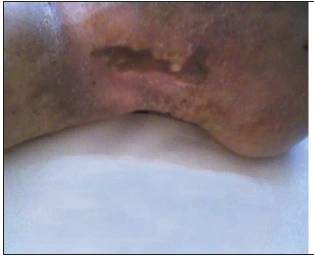 82-Day Follow-up Appearance
Documented Follow-up Steps
The timeline below summarizes the reported wound care process and key follow-up points.
Case Assessment
A venous ulcer associated with venous insufficiency was evaluated in a patient with Type 2 Diabetes Mellitus and high BMI.
Structured Dressing Period
Dressing care was performed over 12 weeks, every other day, together with a triple compression bandage system.
Total Dressing Applications
A total of 42 dressing sessions were reported during the wound care follow-up.
Documented Follow-up Result
The original case documentation reported complete healing within 82 days.
Outcome Highlights
Explore More Actolind® Clinical Case Resources
Review additional wound care case materials, product information and professional resources prepared for healthcare professionals.
View All Case Studies