
'/%3E%3C/svg%3E)

'/%3E%3Cpath%20fill='%23b2b2b2'%20d='M241%20382q0%2016%2017%2026%2017%2011%2042%2011t42-11q16-11%2017-26V269H241'/%3E%3Cpath%20fill='%239f7e00'%20d='M241%20379q0%2014%208%2023%209%209%2021%209%2014%200%2021-9%209-9%209-23V269h-59'/%3E%3Cpath%20d='M241%20339v-70h59v110q0%2014-9%2023l-6%205v-68h-15v72q-8%200-14-4v-68zm59%2040c0%2022%2015%2032%2029%2032%2021%200%2030-18%2030-32v-40h-59'/%3E%3Cpath%20fill='%239f7e00'%20d='M266%20277v5h2v12h-3v-5h2v-5h-9v5h2v5h-4v9h3v18h-5v10h34v-10h-5v-18h3v-9h-4v-5h2v-5h-9v5h2v5h-3v-12h2v-5zm42%20101q0%2010%206%2017%206%206%2015%207%2010-1%2016-7%206-7%206-17v-29h-43'/%3E%3Ccircle%20fill='%230044ad'%20cx='329.5'%20cy='372'%20r='6'/%3E%3Cellipse%20fill='%230044ad'%20cx='300'%20cy='340'%20rx='16'%20ry='21'/%3E%3C/svg%3E)


'/%3E%3C/g%3E%3Cuse%20href='%23c'%20transform='matrix(-1%200%200%201%20720%200)'/%3E%3C/svg%3E)





Diabetic Burn Wound with EGF, PRF and NPWT
A documented diabetic burn wound case involving debridement, Polyhexanide + Poloxamer solution, EGF, NPWT, PRF and Polyhexanide + Poloxamer gel support, with near-complete epithelialization reported by day 24.

Essential Case Information
This overview summarizes the case in a structured format: who, what, where, when, why and how the diabetic burn wound care pathway was managed.
The Patient
A 53-year-old female patient with diabetes mellitus, hypertension and a history of cerebrovascular disease.
The Clinical Problem
Deep burn wounds on both feet after the patient did not notice foot burns while making bread, due to diabetes-related risk factors.
The Setting
The case was documented by the Plastic, Reconstructive and Aesthetic Surgery Department, Wound Healing Unit, Kahramanmaraş Sütçü İmam University Faculty of Medicine.
The Timeline
Debridement and initial therapy were followed by EGF and NPWT. NPWT was stopped on day 12, PRF and gel support were added, and near-complete epithelialization was observed by day 24.
The Objective
The objective was to support diabetic burn wound healing through wound bed preparation, infection-risk management, glycemic regulation and advanced wound care modalities.
The Care Pathway
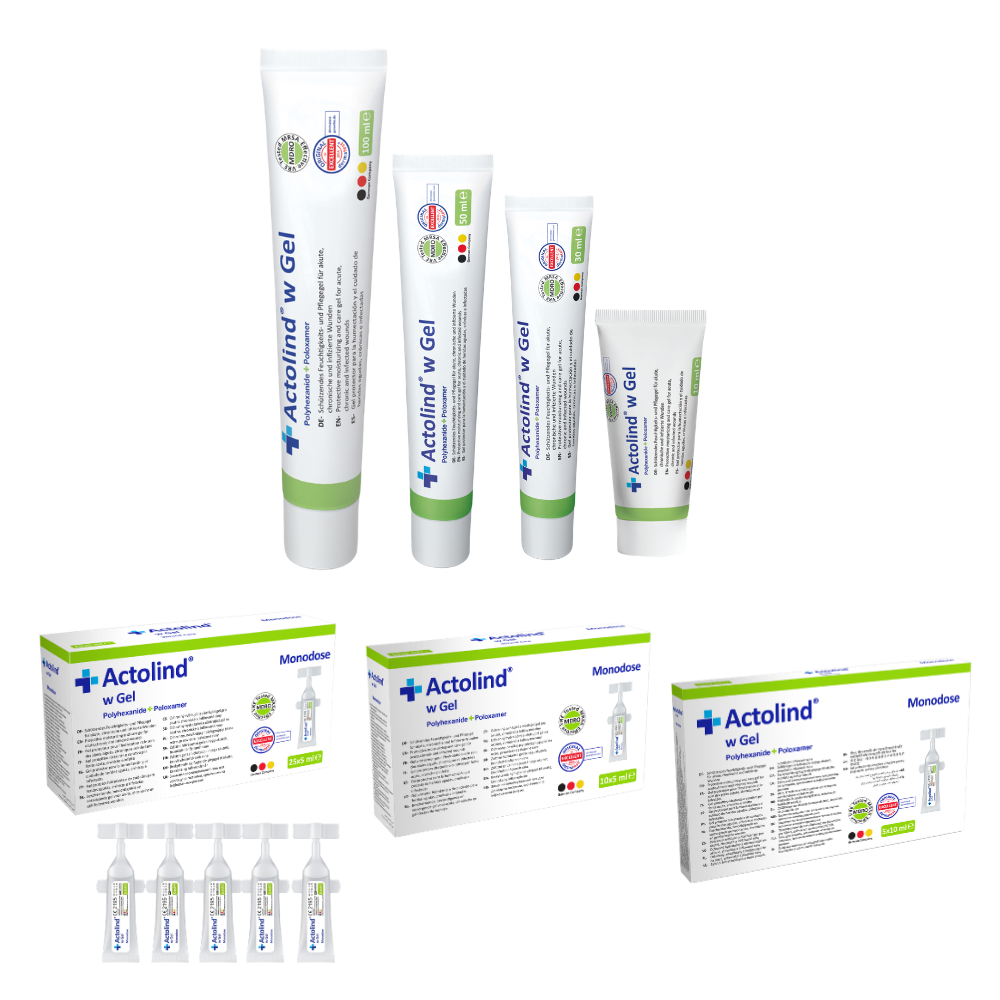
The wound was debrided, cleansed with Actolind® Solution Plus, treated with EGF and NPWT, then supported with PRF and Actolind® Gel Plus.
Objective
This case presents a diabetic burn wound management pathway using Polyhexanide + Poloxamer solution and gel together with EGF, PRF and NPWT. The objective was to support wound bed preparation, reduce complication risk and promote epithelialization in a high-risk diabetic burn wound.
Case Summary
A 53-year-old female patient presented with deep burn wounds on both feet after not noticing that her feet had burned while making bread. The patient had diabetes mellitus, hypertension and a history of cerebrovascular disease.
Blood tests and wound culture were evaluated, and no infective pathology was reported. Because glucose regulation was impaired, endocrinology consultation was requested and the patient’s medication plan was arranged accordingly.
Wound Care Method
- Blood tests and wound culture were evaluated.
- Endocrinology consultation was performed for glucose regulation.
- The wound area was debrided.
- The wound was cleansed with Actolind® Solution Plus.
- EGF treatment was combined with NPWT in the early phase.
- Dressings were renewed in 3-day intervals.
- NPWT was discontinued on day 12.
- PRF and Actolind® Gel Plus were added to the treatment plan.
- A total of 8 EGF doses were reported.
- A total of 4 PRF + Actolind® Gel Plus dressing sessions were reported.
- Wound epithelialization was monitored throughout follow-up.
Clinical Follow-up
The early wound care phase involved debridement, Actolind® Solution Plus cleansing, EGF and NPWT. Dressings were renewed every 3 days. On day 12, NPWT was discontinued, and PRF together with Actolind® Gel Plus was added to the care plan.
Outcome
According to the original case documentation, near-complete epithelialization of the wound was observed by day 24. The patient was discharged with wound care recommendations.
Diabetic Burn Wound Image Areas
The clinical photographs below are the four supplied case visuals.
Clinical View 1
 Clinical View 2
 Clinical View 3
 Clinical View 4
Documented Follow-up Steps
The timeline below summarizes the reported wound care process and key clinical milestones.
Deep Diabetic Burn Wound
The patient presented with deep burn wounds on both feet. Blood tests and wound culture were evaluated.
Glucose Regulation
Due to impaired glucose regulation, endocrinology consultation was performed and medications were arranged.
Wound Bed Preparation
The wound was debrided and cleansed with Actolind® Solution Plus.
EGF + NPWT
EGF was applied together with NPWT, with dressing renewals every 3 days.
NPWT Discontinued
NPWT was discontinued on day 12, and PRF with Actolind® Gel Plus was added to the care plan.
EGF Treatment
A total of 8 EGF doses were reported in the documented treatment pathway.
PRF + Gel Dressings
A total of 4 PRF and Actolind® Gel Plus dressing sessions were reported.
Near-complete Epithelialization
Near-complete epithelialization was observed by day 24, and the patient was discharged with recommendations.
Outcome Highlights
Explore More Actolind® Clinical Case Resources
Review additional wound care case materials, product information and professional resources prepared for healthcare professionals.
View All Case Studies