





Pressure Ulcer Wound Care
A pressure ulcer wound care case resource involving Actolind® w Solution and Actolind® w Gel, structured wound cleansing, topical support, dressing follow-up and documented wound monitoring.
Essential Case Information
This overview summarizes the case in a structured format: who, what, where, when, why and how the pressure ulcer wound care pathway was managed.
The Patient
A patient with limited mobility and a pressure-related wound requiring regular wound care, nursing support and follow-up.
The Clinical Problem
A pressure ulcer with impaired wound bed condition, requiring systematic cleansing, topical wound care support and appropriate dressing management.
The Setting
The case belongs to the pressure ulcer and nursing wound care documentation within Actolind® clinical case materials.
The Timeline
Wound status was monitored through regular dressing care and photographic follow-up. Dressing frequency was adapted according to wound condition.
The Objective
The objective was to support pressure ulcer wound management through regular cleansing, topical care, dressing protection and professional follow-up.
The Care Pathway
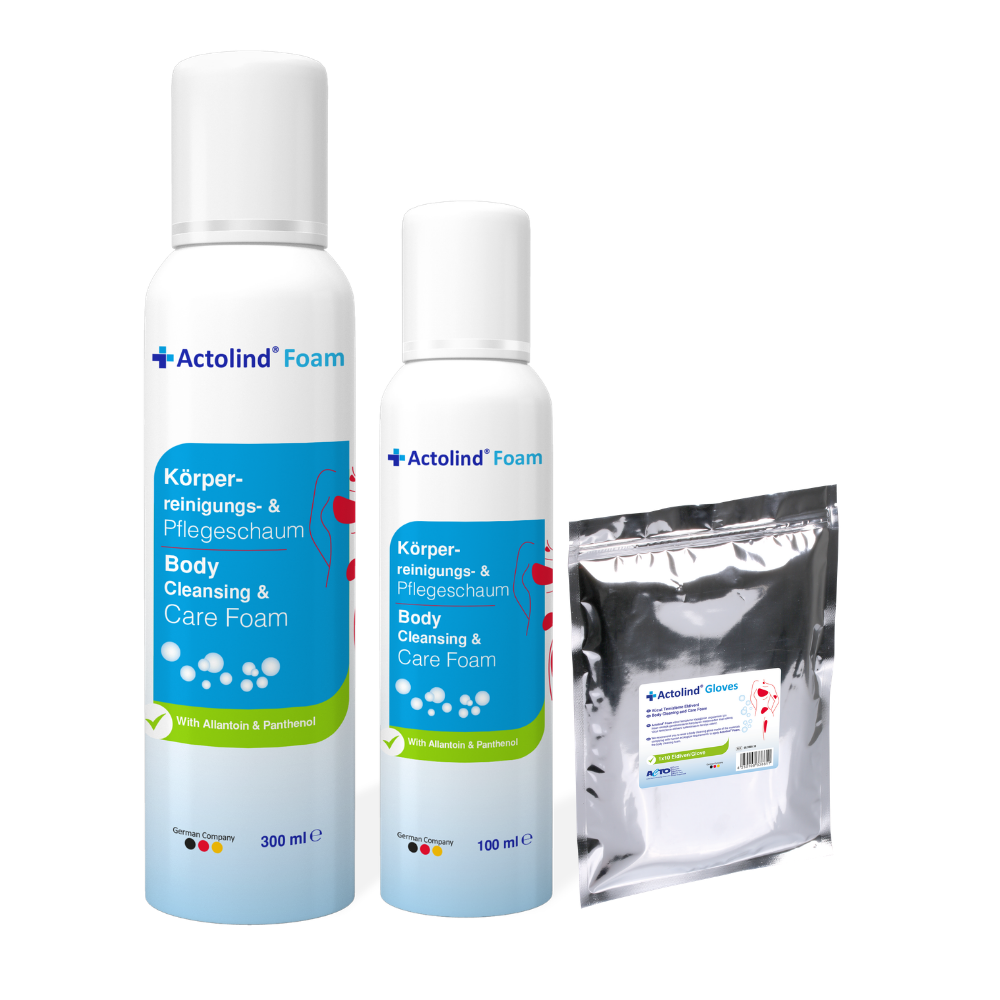
The wound was cleansed with Actolind® w Solution, supported with Actolind® w Gel and managed with appropriate dressing and nursing care.
Objective
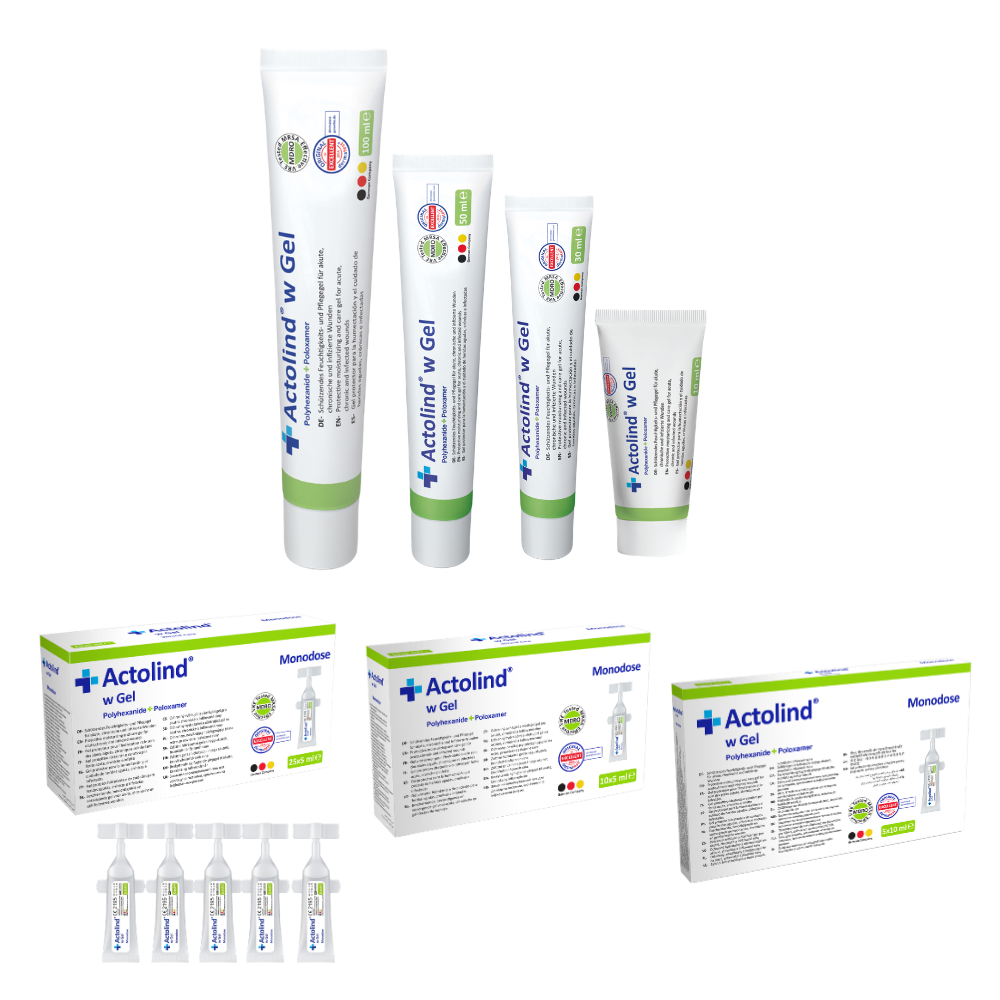
This case resource presents the use of Actolind® w Solution and Actolind® w Gel as part of professional pressure ulcer wound care. The objective is to demonstrate a practical pathway involving wound cleansing, topical support, dressing follow-up and clinical monitoring.
Case Summary
Pressure ulcers, also known as decubitus wounds, develop as a result of prolonged pressure, often over bony prominences. These wounds require continuous assessment, pressure relief, nursing care, wound cleansing, suitable dressing selection and monitoring of the wound bed condition.
In the documented case materials, pressure ulcer care involved regular cleansing with Actolind® w Solution and topical support with Actolind® w Gel. The wound course was monitored clinically and photographically during follow-up.
Wound Care Method
- The wound was assessed before each dressing change.
- Wound cleansing or irrigation was performed with Actolind® w Solution.
- Actolind® w Gel was applied to the wound bed after cleansing.
- A suitable primary dressing was used according to the wound condition.
- Secondary dressing was applied when needed according to exudate level.
- Dressing frequency was adapted according to the wound status.
- Wound progress was documented through clinical observation and photographs.
Clinical Follow-up
During follow-up, wound bed appearance, tissue condition, exudate level and visible progress were monitored. Pressure ulcer management should be integrated with pressure redistribution, repositioning, nutritional support, skin protection and patient-specific risk assessment.
Outcome
The documented pressure ulcer case materials reported visible improvement during follow-up. Outcomes should be interpreted together with the patient’s mobility status, comorbidities, nutrition, pressure relief measures and standard professional care.
Pressure Ulcer Image Areas
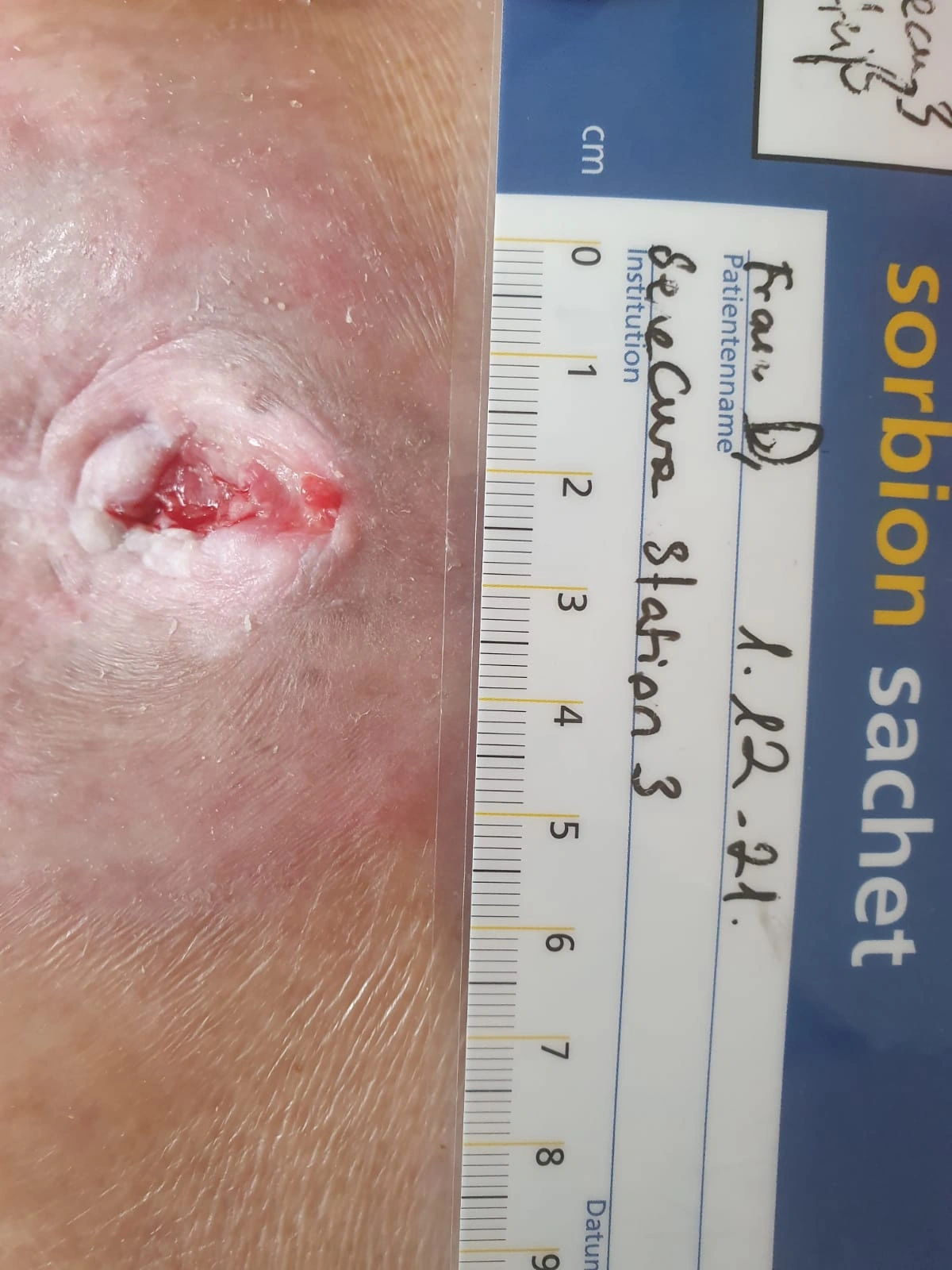
Use these image fields for the original case visuals. Image paths and labels can be changed from the settings area at the top of this HTML block.
Clinical View 1
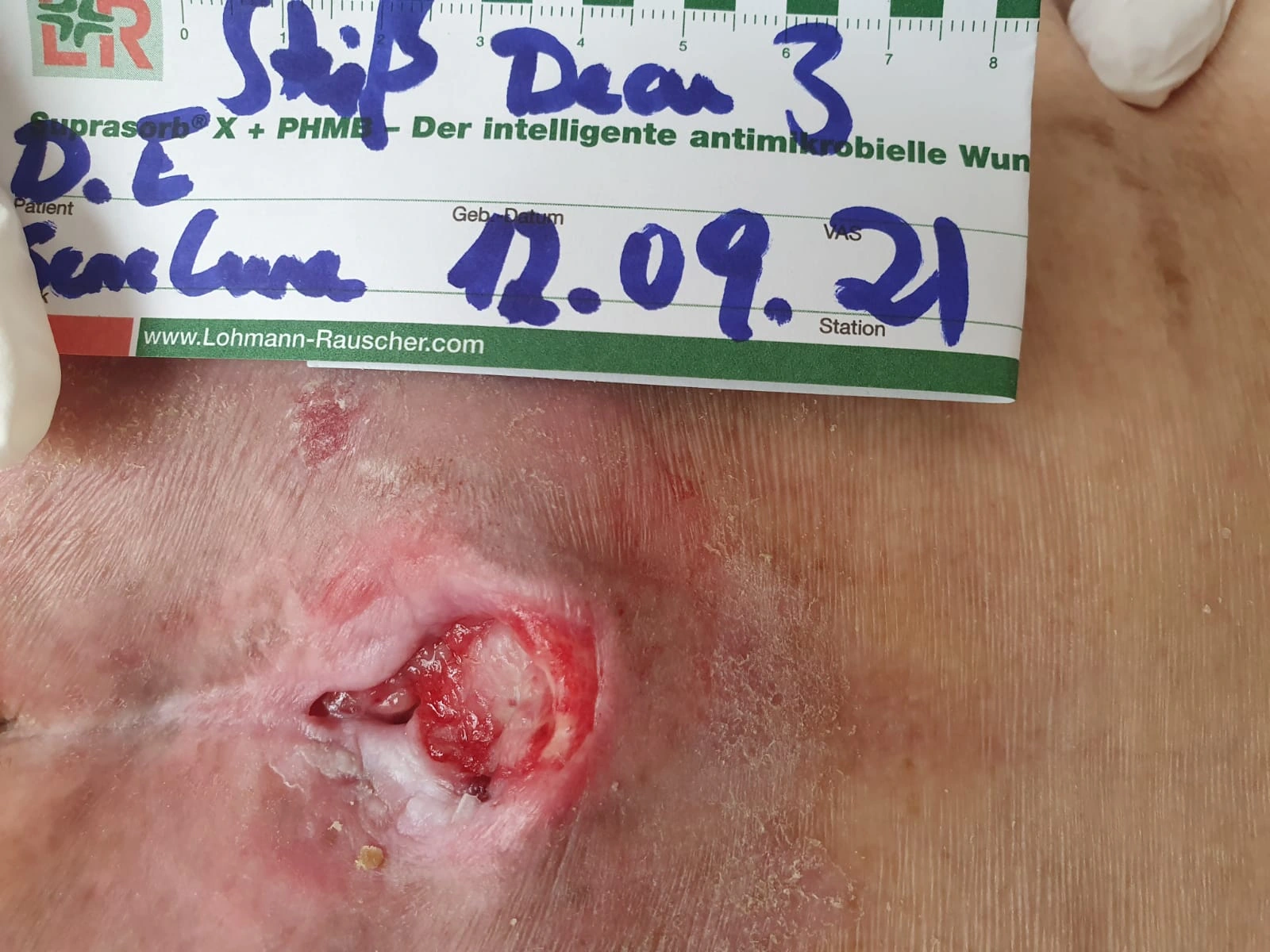 Clinical View 2
Documented Follow-up Steps
The timeline below summarizes the practical pressure ulcer wound care process.
Initial Wound Assessment
Wound stage, wound bed condition, exudate level, surrounding skin and patient-specific risk factors were evaluated.
Systematic Cleansing
The wound was cleansed or irrigated with Actolind® w Solution during dressing changes.
Topical Gel Application
Actolind® w Gel was applied to the wound bed after cleansing as topical wound care support.
Dressing and Protection
A suitable dressing was selected according to wound status, exudate and surrounding skin condition.
Ongoing Monitoring
Wound progress was monitored with regular clinical follow-up and photographic documentation.
Outcome Highlights
Explore More Actolind® Clinical Case Resources
Review additional wound care case materials, product information and professional resources prepared for healthcare professionals.
View All Case Studies